Tropical Rainforests: Why the World’s Most Complex Ecosystems Matter
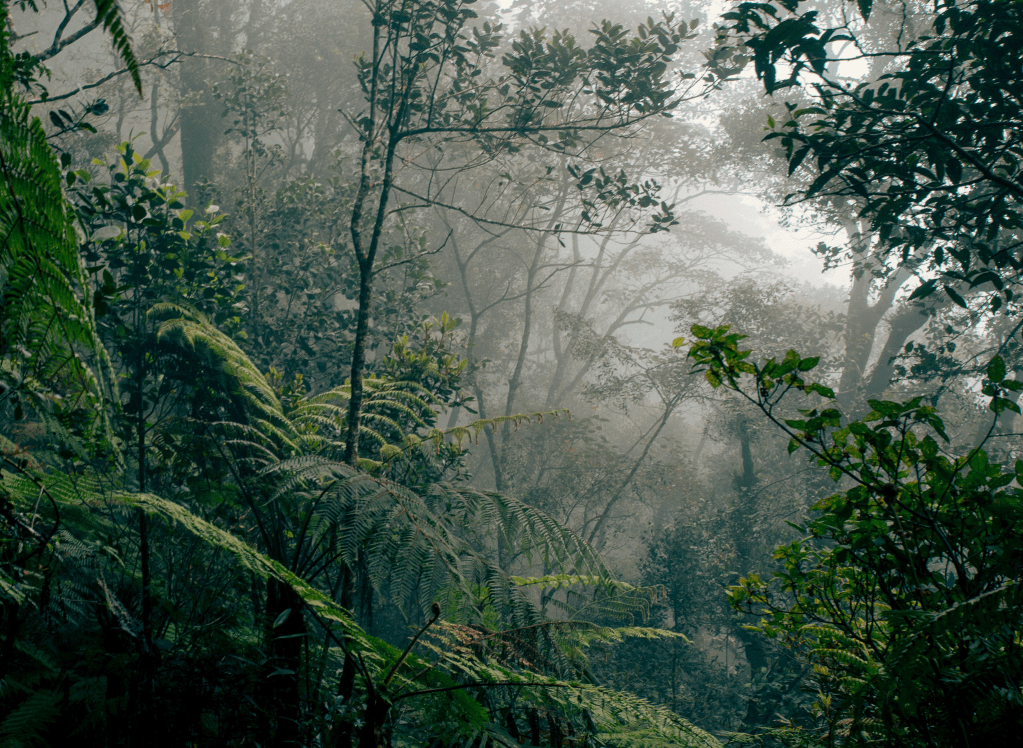
Tropical rainforests are among the most biologically rich and ecologically important ecosystems on Earth. Found primarily near the equator, these forests occupy less than 7% of the planet’s land surface yet support more than half of all known terrestrial species (WWF, Tropical Rainforests). Their value extends far beyond biodiversity alone—tropical rainforests play a measurable role in regulating climate, cycling nutrients, stabilizing soils, and supporting millions of human livelihoods (IPBES, 2019).
Despite their importance, tropical rainforests continue to decline at alarming rates, driven largely by land conversion, resource extraction, and infrastructure expansion (FAO, 2022).
What Defines a Tropical Rainforest?
Tropical rainforests are characterized by:
- High annual rainfall, often exceeding 2,000 mm
- Warm, relatively stable temperatures year-round
- A vertically layered forest structure
This structure creates intense competition for light and nutrients, driving high levels of specialization and biodiversity (National Geographic, Rain Forest).
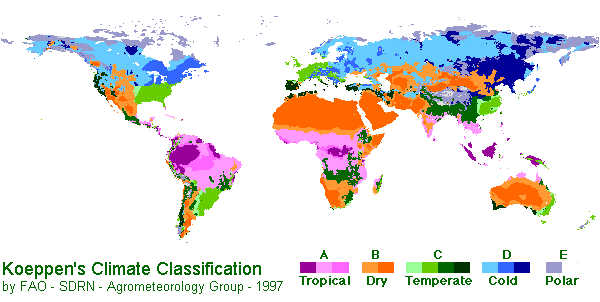
The largest remaining tropical rainforest is the Amazon Rainforest, which spans nine countries and plays a key role in global carbon storage and atmospheric moisture cycling.
Biodiversity Beyond the Numbers
Tropical rainforests are not just species-rich—they are functionally complex. Interactions among plants, insects, mammals, fungi, and microorganisms form tightly linked food webs and nutrient cycles (IPBES, 2019).
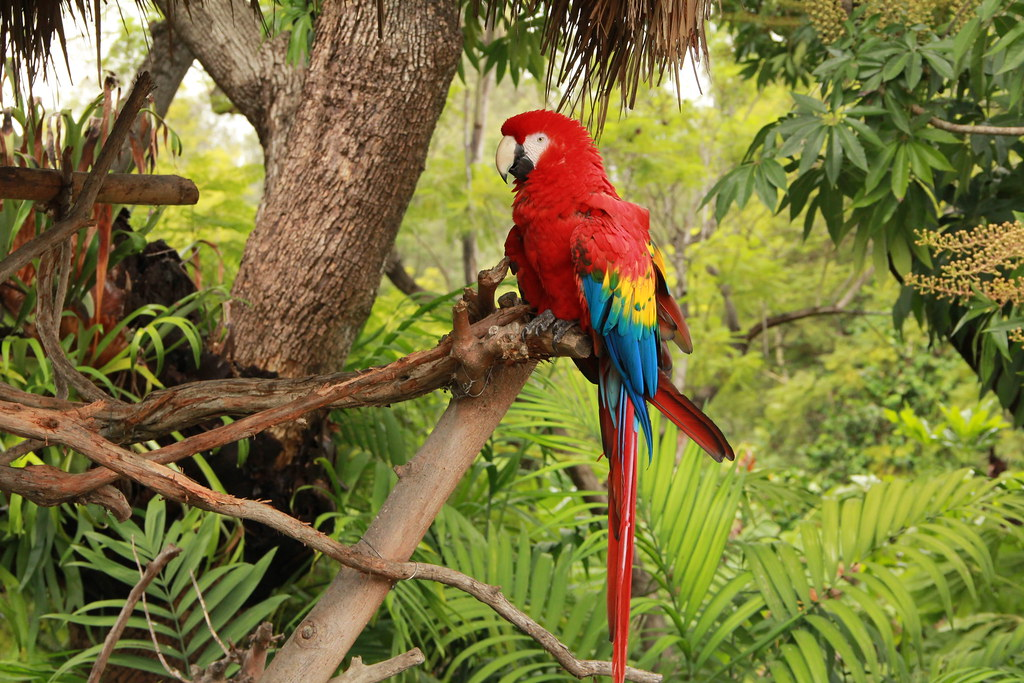
Mammals in tropical rainforests range from canopy-dwelling primates to specialized insectivores such as anteaters. While anteaters are not dominant species, ecological research shows that insectivorous mammals help regulate ant and termite populations, indirectly influencing soil structure and nutrient dynamics (Emmons & Feer, Neotropical Rainforest Mammals). Their presence illustrates how even relatively inconspicuous species contribute to overall ecosystem function.
Climate Regulation and Carbon Storage
Tropical rainforests store vast amounts of carbon in vegetation and soils. Through photosynthesis, they remove carbon dioxide from the atmosphere and help moderate global climate systems (Pan et al., Science, 2011).
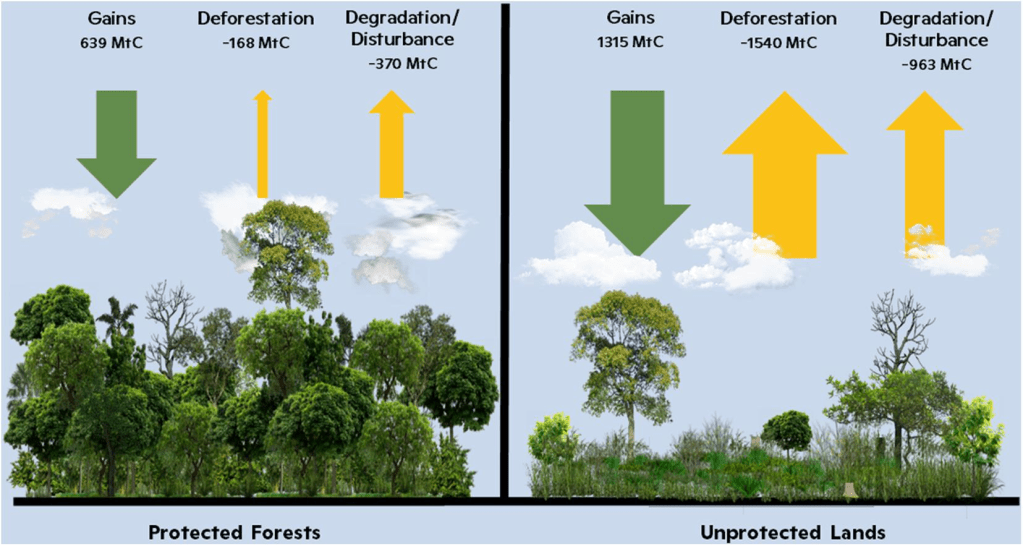
However, this role is increasingly threatened. Deforestation and forest degradation reduce carbon storage capacity and can turn forests from carbon sinks into net carbon sources (IPCC AR6 Working Group I, 2021). Rainforests also influence rainfall patterns through evapotranspiration, affecting precipitation far beyond forest boundaries (Spracklen et al., Nature, 2012).
Human Dependence on Rainforests
Hundreds of millions of people live in or near tropical rainforests, including many Indigenous communities whose livelihoods depend on intact ecosystems (FAO, 2022). Rainforests provide food, medicine, materials, and income, particularly when managed sustainably.
The World Wide Fund for Nature and other conservation organizations emphasize that forest protection efforts are most effective when Indigenous land rights and local governance are respected and supported.
Conservation in a Systems Context
Modern rainforest conservation increasingly focuses on maintaining ecological function at large scales rather than preserving isolated areas. Strategies include:
- Preventing deforestation through land-use policy
- Restoring degraded forest landscapes
- Supporting Indigenous stewardship
- Integrating satellite monitoring and ecological research
Scientific consensus suggests that intact, connected forests are more resilient to climate stress than fragmented landscapes (Haddad et al., Science Advances, 2015).
Rainforests Matter
Tropical rainforests are often described as irreplaceable because of the timescales required for recovery. Once lost, their biodiversity and structural complexity may take centuries to reassemble—if they recover at all (IPBES, 2019).
Species like anteaters represent just one thread in an immense ecological network. Their role may be modest in isolation, but within the broader rainforest system, they contribute to the balance that allows these ecosystems to function. Protecting tropical rainforests is therefore not about preserving individual species alone, but about sustaining interconnected systems that support life far beyond the tropics.
Sources:
Intergovernmental Science-Policy Platform on Biodiversity and Ecosystem Services (IPBES).
Global Assessment Report on Biodiversity and Ecosystem Services. 2019.
https://ipbes.net/global-assessment
Food and Agriculture Organization of the United Nations (FAO).
The State of the World’s Forests 2022: Forest Pathways for Green Recovery and Building Inclusive, Resilient and Sustainable Economies.
https://www.fao.org/forest-resources-assessment
https://www.fao.org/state-of-forests
Pan, Yude et al. “A Large and Persistent Carbon Sink in the World’s Forests.”
Science, vol. 333, no. 6045, 2011, pp. 988–993.
https://www.science.org/doi/10.1126/science.1201609
Intergovernmental Panel on Climate Change (IPCC).
Sixth Assessment Report (AR6), Working Group I: The Physical Science Basis. 2021.
https://www.ipcc.ch/report/ar6/wg1/
Spracklen, Dominick V., et al. “Observations of Increased Tropical Rainfall Preceded by Air Passage Over Forests.”
Nature, vol. 489, 2012, pp. 282–285.
https://www.nature.com/articles/nature11377
Emmons, Louise H., and François Feer.
Neotropical Rainforest Mammals: A Field Guide. 2nd ed., University of Chicago Press, 1997.
Global Forest Watch. “Tropical Deforestation.”
https://www.globalforestwatch.org
Haddad, Nick M., et al. “Habitat Fragmentation and Its Lasting Impact on Earth’s Ecosystems.”
Science Advances, vol. 1, no. 2, 2015.
https://www.science.org/doi/10.1126/sciadv.1500052
World Wide Fund for Nature (WWF). “Indigenous Peoples and Forest Conservation.”
https://wwf.panda.org/discover/people_and_conservation/communities_and_indigenous_peoples/
Millennium Ecosystem Assessment.
Ecosystems and Human Well-being: Synthesis. 2005.
https://www.millenniumassessment.org
Lewis, Simon L., Charlotte E. Wheeler, and Edward T. A. Mitchard.
“Regenerative Agriculture and Tropical Forest Resilience.”
Nature Climate Change, vol. 9, 2019.
https://link.springer.com/article/10.1007/s44279-025-00266-9
Gibbs, Holly K., et al. “Tropical Forests Were the Primary Sources of New Agricultural Land in the 1980s and 1990s.”
Proceedings of the National Academy of Sciences (PNAS), vol. 107, no. 38, 2010.
https://www.pnas.org/doi/10.1073/pnas.0910275107
