New vs. Thrifted T-Shirts: The Environmental Cost
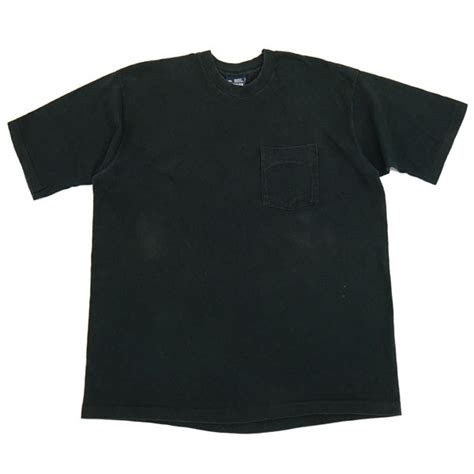
A T-shirt can be one of the simplest items we buy. It’s lightweight, affordable, and easy to replace. But when you step back and look at how a T-shirt is made, the environmental footprint becomes harder to ignore.
From the water used to grow cotton to the fuel burned shipping clothes around the world, a brand-new T-shirt carries environmental costs at every stage of its life. A thrifted T-shirt, on the other hand, has already passed through most of those stages. Reusing it doesn’t erase its impact, but it does avoid repeating the most resource-intensive parts of the process.
This article walks through the full life cycle of a T-shirt, comparing what it takes to buy new versus buying secondhand, and why reuse plays a meaningful role in reducing fashion’s environmental impact.
Raw Materials

Most T-shirts are made from cotton, polyester, or a blend of the two.
Cotton is a natural fiber, but it’s far from low-impact. Growing cotton requires large amounts of water—on average, about 2,700 liters for a single T-shirt¹. In many cotton-growing regions, that water comes from irrigation, putting pressure on rivers and groundwater supplies. Cotton farming also relies heavily on pesticides and fertilizers, which can degrade soil and contaminate nearby waterways².
Polyester, by contrast, doesn’t need irrigation, but it’s made from fossil fuels. Producing polyester fiber is energy-intensive and emits significantly more carbon dioxide per kilogram than cotton³. Synthetic fibers also introduce another issue: microplastic pollution, which occurs when polyester garments shed tiny plastic fibers during washing.
When you buy a thrifted T-shirt, none of this happens again. No new cotton is grown. No oil is extracted. The environmental cost of raw material production has already been paid.
Manufacturing
After fibers are produced, they’re spun into yarn, knitted into fabric, dyed, finished, and sewn. This is where a large share of a T-shirt’s environmental impact is concentrated.
Textile dyeing and finishing are particularly polluting. Globally, these processes are responsible for around 20% of industrial water pollution, largely due to untreated wastewater containing dyes and chemicals⁴. Manufacturing also requires electricity and heat, much of which still comes from fossil fuels in major garment-producing countries.
By the time a cotton T-shirt is finished and ready to sell, its total carbon footprint typically falls in the range of 6–8 kilograms of CO₂-equivalent emissions⁵.
Secondhand clothing skips this entire stage. Aside from sorting and resale logistics, no new industrial production is required. This makes reuse one of the most effective ways to reduce fashion-related emissions.
Shipping

Most new T-shirts travel long distances before reaching consumers. Cotton may be grown in one country, spun and sewn in another, and sold halfway across the globe. Shipping by container ship, truck, or air freight adds additional emissions, especially for fast fashion brands that rely on speed⁶.
Thrifted clothing isn’t impact-free—items may still be transported to resale shops or shipped to buyers—but it usually avoids the intercontinental shipping tied to new production. In many cases, resale happens locally or regionally, keeping transport emissions relatively low.
Wearing and Washing
Whether a T-shirt is new or thrifted, its environmental impact continues during use. Washing and drying consume water and energy, and synthetic fabrics release microfibers into waterways⁷.
The key difference is how long the shirt is worn. Studies consistently show that extending the life of clothing significantly reduces environmental impact per wear⁸. A T-shirt worn for several additional years spreads its original production footprint across many more uses.
Buying secondhand naturally extends a garment’s lifespan, making better use of the resources already invested in it.
Textile Waste
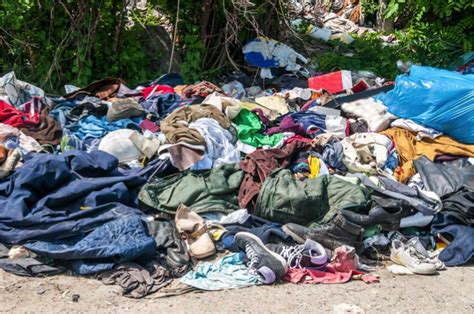
Globally, an estimated 92 million metric tons of textile waste are generated each year⁹. In many countries, the majority of discarded clothing ends up in landfills or incinerators, where the water, energy, and materials used to make them are effectively lost¹⁰.
Each thrifted T-shirt delays disposal and reduces demand for new clothing. Even modest increases in clothing lifespan—just a few extra months—can reduce carbon, water, and waste impacts by **20–30%**¹¹.
What the Numbers Show
Life-cycle assessments comparing new and secondhand clothing consistently find substantial environmental savings from reuse. On average, replacing a new garment with a secondhand one reduces:
- Greenhouse gas emissions by roughly 40–45%
- Water use by 35–50%
- **Energy demand by around 40%**¹²
For a single T-shirt, that can mean avoiding several kilograms of CO₂ emissions and hundreds of liters of water use—simply by choosing something that already exists.
References
- Chapagain, A. K., et al. The Water Footprint of Cotton Consumption. UNESCO-IHE Institute for Water Education, 2006.
https://waterfootprint.org/media/downloads/Report18.pdf - World Wildlife Fund. Cotton and Water. World Wildlife Fund, 2021.
https://www.worldwildlife.org/industries/cotton - Shen, Li, et al. “Life Cycle Assessment of Man-Made Cellulosic Fibres.” Resources, Conservation and Recycling, vol. 55, no. 2, 2010.
https://doi.org/10.1016/j.resconrec.2010.09.001 - United Nations Environment Programme. Sustainability and Circularity in the Textile Value Chain. UNEP, 2020.
https://wedocs.unep.org/20.500.11822/42580 - Carbon Trust. International Carbon Flows: Clothing. Carbon Trust, 2011.
https://www.carbontrust.com/sites/default/files/documents/resource/public/International%20Carbon%20Flows%20-%20Clothing%20-%20REPORT.pdf - McKinnon, Alan. Decarbonizing Logistics. Kogan Page, 2018.
https://www.koganpage.com/products/decarbonizing-logistics - Browne, Mark A., et al. “Accumulation of Microplastic on Shorelines Worldwide.” Environmental Science & Technology, vol. 45, no. 21, 2011.
https://pubs.acs.org/doi/10.1021/es201811s - WRAP. Valuing Our Clothes: The Cost of UK Fashion. Waste and Resources Action Programme, 2017.
https://wrap.org.uk/resources/report/valuing-our-clothes-cost-uk-fashion - Ellen MacArthur Foundation. A New Textiles Economy: Redesigning Fashion’s Future. 2017.
https://ellenmacarthurfoundation.org/a-new-textiles-economy - U.S. Environmental Protection Agency. Textile Waste: Material-Specific Data. EPA, 2023.
https://www.epa.gov/facts-and-figures-about-materials-waste-and-recycling/textiles-material-specific-data - WRAP. Extending the Life of Clothes. WRAP, 2019.
https://www.wrap.ngo/resources/case-study/extending-product-lifetimes-wraps-work-clothing-durability - ThredUp. Life Cycle Assessment of Secondhand Clothing. Green Story Inc., 2018.
https://www.thredup.com/fashionfootprint/
