Do Electric Cars Really Lower Carbon Emissions?
Electric vehicles are often hailed as a climate solution—but a common argument is that once manufacturing, mining, and electricity generation are considered, EVs may not reduce emissions at all. Do electric cars actually lower greenhouse gas emissions, or do they simply shift pollution out of sight and out of mind?
The answer depends less on ideology and more on how emissions are counted, where system boundaries are drawn, and what assumptions are made about the economy that produces cars in the first place.
How Much Carbon Does a Typical Gasoline Car Emit?
To establish a baseline, we first need to understand emissions from conventional vehicles.
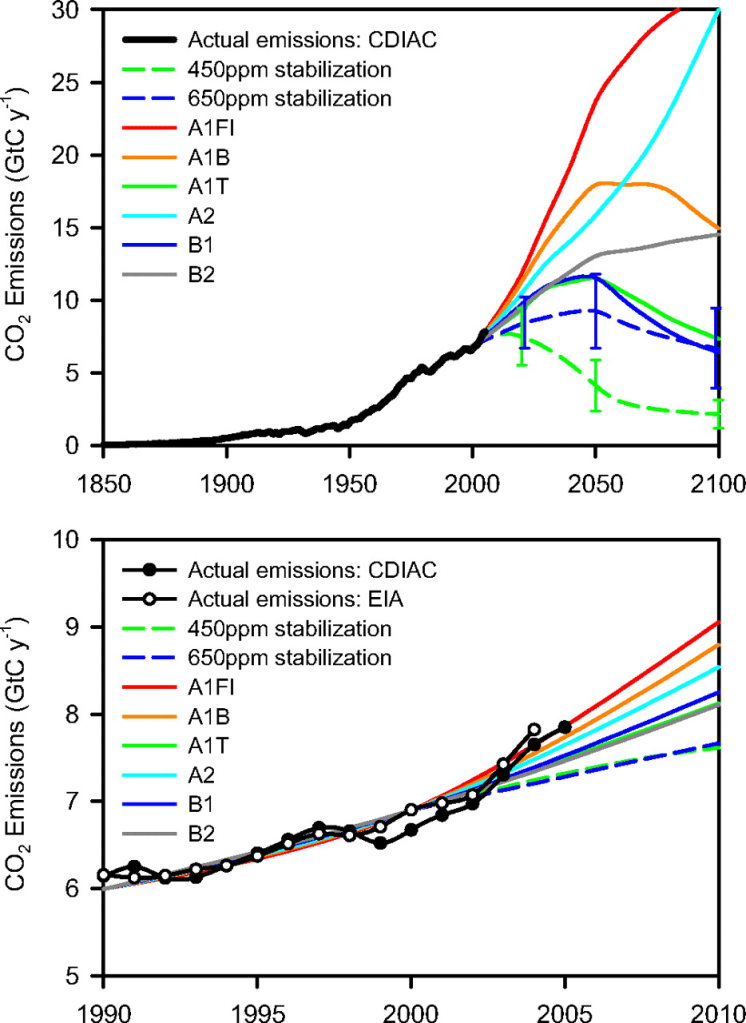
According to the U.S. Environmental Protection Agency, the average passenger vehicle emits about 4.6 metric tons of carbon dioxide per year. This estimate assumes a gasoline car with a fuel economy of roughly 22.2 miles per gallon driving about 11,500 miles annually. Each gallon of gasoline burned releases approximately 8,887 grams of CO₂ (EPA)¹.
Over a typical vehicle lifespan of 12–15 years, this results in 55–70 metric tons of CO₂ emitted from fuel use alone—before accounting for manufacturing, maintenance, or disposal.
This framing, however, only captures tailpipe emissions, which is where much of the public debate becomes distorted.
Production Costs
A major blind spot in many discussions about cars—electric or otherwise—is the carbon cost of producing the vehicle itself.
One way to estimate this is through input–output analysis, an economic method that allocates total national or global emissions across industries based on how goods and services flow between them. When applied to the auto industry, this approach suggests an average footprint of 720 kilograms of CO₂-equivalent per £1,000 spent on a new vehicle².
Using this method, producing a mid-priced £24,000 car could generate over 17 metric tons of CO₂e, a figure comparable to several years of household energy use in the UK. Notably, only about 12% of this footprint comes from the auto industry’s direct energy use (factories, assembly plants, and component manufacturing). The majority comes from upstream processes: steel, aluminum, plastics, mining, global shipping, capital equipment, and supporting services².
This challenges the common assumption that manufacturing emissions are limited to what happens on the factory floor.
The Carbon Cost Of Cars Is Rising
These production emissions matter more than ever because cars are getting more expensive.
In September, the average transaction price of a new vehicle in the U.S. reached $50,080, an all-time high³. Applying the same input–output methodology, that price implies approximately 26,300 kilograms of CO₂e associated with the vehicle’s production⁴.
If direct manufacturing energy accounts for just 12% of the total footprint, and the remaining emissions are embedded across supply chains, capital equipment, extraction, logistics, and business operations, then the full economy-wide emissions associated with producing a new car could reach approximately 219,000 kilograms (219 metric tons) of CO₂e⁵.
Important clarification
This does not mean a single car physically releases 219 tons of CO₂ when it rolls off of the assembly line. Rather, it reflects how much carbon pollution is distributed across the global economy as a result of producing, financing, and delivering a new vehicle to the end consumer. Confusing these two interpretations is a common fallacy.
EV Critics Are Right (Sometimes)
Electric vehicles generally have higher upfront manufacturing emissions than gasoline cars, largely due to battery production. Mining and refining lithium, nickel, cobalt, copper, and graphite are energy-intensive processes, and battery factories themselves consume substantial electricity.

From a narrow manufacturing-only perspective, EVs often start their lives with a larger carbon “debt.” Ignoring this reality weakens the credibility of pro-EV arguments.
However, stopping the analysis here introduces a different error.
Upfront ≠ Lifetime
The most common fallacy in anti-EV arguments is treating upfront emissions and lifetime emissions as equivalent.
Gasoline vehicles continue emitting CO₂ every time they are driven. Electric vehicles do not burn fuel and are far more energy-efficient, converting a much higher share of energy into motion. As a result, EVs tend to “pay back” their higher production emissions over time through lower operational emissions.
Even on relatively fossil-heavy electricity grids, EVs typically emit less CO₂ per mile than comparable gasoline vehicles. As grids add renewable and low-carbon generation, the emissions associated with driving an EV continue to decline—while emissions from gasoline cars do not.
The Grid Matters
Electricity sources matter. Charging an EV on a coal-heavy grid produces more emissions than charging on a renewable-heavy one. But this reality cuts both ways:
- Gasoline cars are locked into a fuel that will not decarbonize.
- Electric vehicles become cleaner automatically as the grid improves.
- Over a 10–15 year lifespan, grid evolution matters more than the grid mix at the time of purchase.
Freezing the grid in time is another common analytical mistake used to exaggerate EV emissions.
Vehicle Size and Consumption
One of the most important insights from input–output analysis is that price and material intensity matter.
Large electric trucks and SUVs can have enormous manufacturing footprints. A smaller, efficient gasoline car may outperform a massive EV in total emissions. This does not undermine EV technology—it highlights that vehicle size, weight, and consumption often matter more than drivetrain alone.
Electrifying an inefficient transportation system does not make it sustainable.
So—Do Electric Cars Reduce Greenhouse Gas Emissions?
Yes, in most cases.
Electric vehicles generally reduce greenhouse gas emissions over their full lifecycle, especially when:
- They replace gasoline vehicles of similar size
- They are driven enough to offset higher manufacturing emissions
- They operate on grids that are decarbonizing
- They are not excessively large or overpowered
However, EVs are not a silver bullet. High upfront emissions, rising vehicle prices, growing material demand, and car-dependent infrastructure all limit their climate benefits.
Works Cited (MLA)
- United States Environmental Protection Agency. “Greenhouse Gas Emissions from a Typical Passenger Vehicle.” EPA, https://www.epa.gov/greenvehicles/greenhouse-gas-emissions-typical-passenger-vehicle#burning.
- Berners-Lee, Mike. “What Is the Carbon Footprint of a New Car?” The Guardian, 23 Sept. 2010, https://www.theguardian.com/environment/green-living-blog/2010/sep/23/carbon-footprint-new-car.
- Pequeno IV, Antonio. “Average U.S. New Car Price Surpasses $50,000.” Forbes, 13 Oct. 2025, https://www.forbes.com/sites/antoniopequenoiv/2025/10/13/average-us-new-car-price-surpasses-50000-an-all-time-high-amid-surging-ev-sales/.
- Author’s calculation based on input–output emissions factor of 720 kg CO₂e per £1,000 spent and average U.S. vehicle transaction price.
- Author’s calculation extrapolating total economy-wide emissions assuming direct manufacturing accounts for approximately 12% of total vehicle production emissions.
