Clean Energy Can’t Be Built on Rural Sacrifice Zones
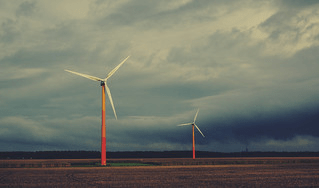
Drive through almost any rural county right now and you’ll see the energy transition taking shape. Solar arrays replacing cropland. Wind turbines rising over rolling hills. Survey flags marking future transmission corridors. On paper, this may look like progress to some but in practice, it’s a more complicated topic.
The fact that we need to de-carbonize quickly should not be a debate. What gets far less attention is where clean energy infrastructure is built, who decides, and who lives with the consequences.
If we’re not careful, the clean energy transition risks repeating a historical pattern that some aren’t comfortable with: shifting the burdens of progress onto rural communities with the least political power.
What a “Sacrifice Zone” Means Today
Historically, sacrifice zones were places written off in the name of growth. Coal towns, refinery corridors, nuclear test sites. Communities where land, health, and ecosystems were treated as expendable for benefits flowing into society elsewhere.
Renewable energy is not as bad as fossil fuels. But scale matters.
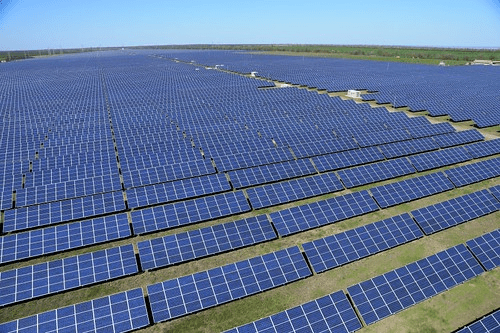
In California’s Central Valley, thousands of acres of irrigated farmland have been converted to utility-scale solar meant to power coastal cities. For some landowners, lease payments offer stability in an increasingly volatile agricultural economy. For others, the loss of productive farmland raises concerns about food security, groundwater management, and what happens when panels reach the end of their lifespan.
These concerns are not limited solely to one part of the country. A congressional hearing on renewable energy siting acknowledged that “the lack of proactive planning for siting and site layout of these facilities…has had adverse impacts,” including “the removal of valuable farmland and forestland.” The same record notes “growing resentment that these facilities are imposed on rural communities to benefit urban communities.”
The electricity for the most part flows outward. The land-use tradeoffs stay local.
The Environmental Justice Critique
Critics of the current rollout aren’t necessarily against clean energy. They’re arguing against how it’s being built.
One major concern is procedural. Rural communities are often brought into the process late, after siting decisions are effectively locked in. Public meetings happen, but they’re informational rather than collaborative with the communities that are directly affected.

That dynamic played out in Osage County, Oklahoma, where wind developers moved forward on land held in trust for the Osage Nation without securing proper permission for subsurface rock extraction. Years of litigation followed, along with deep community division. Local reporting captured residents’ concerns that the project would “permanently alter the landscape and impact wildlife,” and the county ultimately rejected the development.
There’s also a distributive concern. Urban and suburban areas consume most of the electricity. Utilities and developers capture long-term profits. Rural communities absorb land conversion, habitat fragmentation, and changes to local economies.
The Counterargument: Climate Urgency
Supporters of rapid renewable deployment push back hard on the sacrifice-zone framing. Climate timelines are tight. Every delay has real consequences. Every energy system has land impacts, and renewables still come out far ahead on public health and emissions.
Some resistance, they argue, is simply opposition to change. The “NIMBY” label gets applied. Concerns about rural character or viewsheds are framed as secondary to the planetary emergency.
There’s a truth here too. Clean energy will require land. Transmission lines have to go somewhere. And many projects do provide lease income, tax revenue, and jobs, even if those benefits are uneven or temporary.
The question then becomes: how do you roll this out quickly and effectively?
Where the Debate Breaks Down
This debate often collapses into a false binary. Either you support clean energy at all costs, or you’re standing in the way of progress.
That framing breaks down most clearly around transmission. High-voltage lines designed to connect Great Plains wind to eastern cities are essential for de carbonizing the grid. But they often cut directly across privately held farmland. Compensation is negotiated parcel by parcel, while benefits are national.
One Oklahoma landowner put it bluntly when discussing a proposed transmission project: “If this project comes through…that puts my hopes and dreams for this place in dire jeopardy.”
Research on renewable siting helps explain why these conflicts keep emerging. One energy justice analysis notes that “techno-economic factors often correlate to regions of low population density,” leading wind and solar to be disproportionately sited in rural areas. The same research emphasizes that impacts vary widely depending on community context.
Conflict isn’t inevitable. But it’s predictable when decision-making power is centralized and impacts are localized.
A Different Model: Energy Democracy
There is another way to approach the energy transition, one that doesn’t rely on sacrifice as a prerequisite.
Energy democracy is a broad term but simple idea to understand. Communities should have decision-making power, shared ownership, and direct benefits from the energy built on their land.
That can mean community-owned solar and wind cooperatives. It can mean revenue-sharing models that fund schools, infrastructure, and conservation. It can mean consent processes that allow projects to change shape or scale based on local input.
These approaches don’t eliminate conflict, but they can change its nature. This is because people are no longer just hosting infrastructure. They’re direct stakeholders in it.
Why Rural Voices Matter
Rural landscapes are often treated as empty space on a map, but they’re not. In reality, they’re places with ecological knowledge, cultural ties, and economic constraints that mostly tower over those in big cities.
When people feel ignored or overridden, climate action becomes something done to them, not with them. That resentment doesn’t stay local. It feeds broader backlash against environmental policy in modern political culture.
If the clean energy transition alienates rural communities, it doesn’t just fail ethically. It inherently fails strategically.
Building a Better Energy Transition
De-carbonization is non-negotiable at this time. But the method matters as much as the outcome.
We can build a clean energy system that mirrors the extractive logic of the past, or we can build one that redistributes power along with electricity. One that treats land as a partner.
The transition will shape landscapes for generations. We need to ask who pays for our energy transition, and whether they had a real say in the matter.
Clean energy that depends on rural sacrifice isn’t as clean as we like to believe.
Read More:
U.S. Congress. A Look at the Renewable Economy in Rural America. https://www.congress.gov/117/chrg/CHRG-117hhrg49362/generated/CHRG-117hhrg49362.htm
Wheeler, Graycen, and Anna Pope. Oklahomans push back on transmission projects even as the state’s energy needs continue to grow. Oklahoma Voice, February 2, 2025. https://oklahomavoice.com/2025/02/02/oklahomans-push-back-on-transmission-projects-even-as-the-states-energy-needs-continue-to-grow/
Rural Reconciliation Project. Energy Justice Implications of Renewable Energy Project Siting. https://www.ruralreconcile.org/ruralreview/renewableenergyjustice
