Why Banning Straws Didn’t Really Save the Ocean: The Real Problem With Fishing Nets
Introduction
Bans on plastic straws were introduced as symbolic steps toward reducing marine pollution. While they raised awareness, straws make up a tiny portion of ocean plastic waste. Research shows the majority of large, persistent plastic pollution in the ocean comes from lost and abandoned fishing gear. These materials, often called ghost nets, continue to trap wildlife and break down slowly over decades.
How the Straw Narrative Started
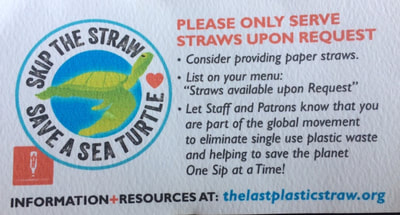
The global push for straw bans gained traction after a viral video of a turtle with a straw lodged in its nostril. The response focused on consumer plastics in daily life. Although well intentioned, the narrative did not reflect the actual composition of ocean debris.
Straws account for less than 1% of ocean plastics by weight. Local bans helped reduce one disposability problem, but they didn’t meaningfully impact the main marine pollution sources.
What the Data Shows
Large-scale studies of marine plastic reveal a different picture:
- Commercial fishing gear accounts for an estimated 46% of the Great Pacific Garbage Patch by weight (Lebreton et al., 2018).
- Up to 640,000 tons of fishing gear enter the oceans every year (FAO / UNEP).
- Ghost nets are the primary cause of entanglement for marine mammals, turtles, and seabirds according to NOAA.
- Gear made from high-density polymers can persist for decades, even centuries.
This means that industrial and commercial fishing operations drive much of the large-scale pollution that remains in the water column.
Why Fishing Nets Are Such a Large Problem
1. High Durability
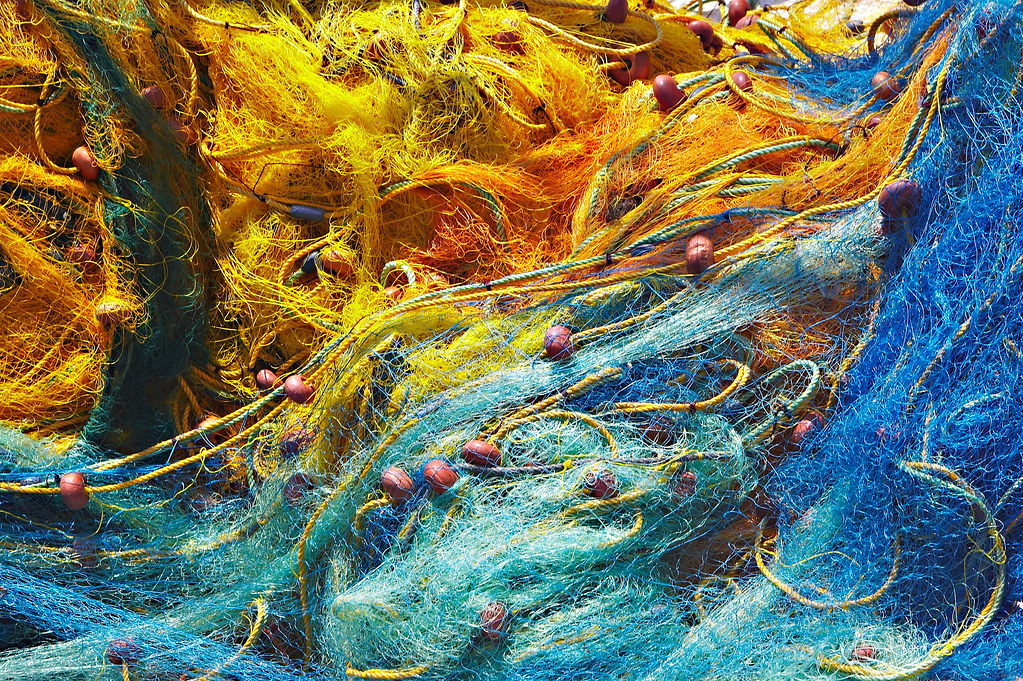
Modern nets and lines use materials like nylon, HDPE, and polypropylene. These polymers resist UV degradation and remain functional in saltwater environments. When lost, the gear continues to drift, entangling wildlife.
2. Active “Ghost Fishing”
Abandoned nets continue to trap fish, turtles, birds, seals, dolphins, and sharks. This loss affects ecosystems and fisheries.
3. Large Physical Size
A single trawl net or longline can weigh hundreds of kilograms. When lost, it contributes far more plastic mass than small consumer items.
4. Fragmentation Over Time
As nets break apart, they become microplastics that circulate through food webs, sediments, and deep-sea environments.
5. Difficult Enforcement and Monitoring
Many fishing regions lack tracking requirements for gear loss. Some fleets operate in international waters where oversight is limited.
Misalignment Between Public Perception and Reality
The public often associates ocean plastic with straws, bags, and bottles because these items are visible in everyday life and coastal clean-ups. In contrast, much fishing gear is lost far offshore, out of sight.
Coastal cleanups regularly report high counts of small consumer plastics, but this reflects what washes ashore, not what remains in open ocean gyres. Research in deep-sea and mid-ocean regions consistently finds nets, traps, floats, and longlines as dominant contributors.
Straw bans addressed a simple, symbolic target rather than a major pollution driver.
Why Consumer Plastics Still Matter
Although fishing gear contributes a large portion of ocean-going plastic by mass, land-based waste is still a problem. Urban runoff, inadequate waste management, and storm drains send large volumes of plastic to coastal areas.
The challenge is that improving consumer waste systems requires infrastructure, while banning straws is easy to legislate. Public messaging favored simple solutions, even if their impact was limited.
Current Solutions for Fishing Gear Pollution
1. Gear Tracking and Reporting
Some governments now require:
- GPS tracking of nets
- Reporting of lost gear
- Retrieval plans for commercial fleets
These measures reduce unreported losses.
2. Biodegradable or Weak-Link Gear
New materials break down faster or include escape openings that release trapped animals.
3. Gear Buyback and Recovery Programs
Ports offer incentives to return broken nets and lines rather than discard them at sea.
4. International Regulations
FAO and regional fisheries organizations promote guidelines to reduce gear loss. Adoption, however, is uneven.
5. Coastal Retrieving Operations
NGOs often remove ghost nets from coral reefs and fishing grounds. Removal helps protect sensitive habitats but requires funding and specialized divers.
Why We Need a Different Approach
Reducing straw use is not harmful, but it should not be the center of marine conservation strategies. The data shows that targeting industrial sources yields greater ecological benefit.
A more effective framework includes:
- Better oversight of commercial fishing fleets
- Tracking and retrieval systems
- International cooperation in high-seas waters
- Improved port reception facilities
- Research into alternative materials
- Incentives for responsible gear management
These measures address the bulk of the problem rather than symbolic portions of it.
FAQs
1. Do straws really account for less than 1% of ocean plastic?
Yes. Estimates place them at well below 1% by weight.
2. What percentage of ocean plastic comes from fishing gear?
Nearly half of the Great Pacific Garbage Patch by mass comes from nets and lines. Global estimates vary but are consistently high.
3. Why is ghost fishing dangerous?
Lost gear keeps catching and killing marine life long after it stops being used.
4. How long do fishing nets last in the ocean?
Decades, depending on material and exposure.
5. Why were straw bans popular?
They were simple, symbolic, and easy for consumers to understand.
6. Are microplastics from nets different from other microplastics?
They usually consist of nylon and polyethylene, but their environmental impacts are similar.
7. What regions have the worst ghost gear problems?
Industrial fishing zones, including the North Pacific and North Atlantic.
8. Can biodegradable nets fix the issue?
They help, but adoption is slow and cost is an obstacle.
9. What organizations work on ghost net removal?
NOAA, The Ocean Cleanup, Ghost Gear Initiative, and various regional NGOs.
10. Are recreational fishers part of the problem?
They contribute some gear loss, but the majority comes from commercial and industrial operations.
Read More:
Lebreton, Laurent C. M., Boyan Slat, Francois Ferrari, Borja Sainte-Rose, Julia Aitken, Robert Marthouse, Simon Hajbane, et al.
“Evidence That the Great Pacific Garbage Patch Is Rapidly Accumulating Plastic.” Scientific Reports 8, no. 1 (2018): 4666. https://www.nature.com/articles/s41598-018-22939-w
Food and Agriculture Organization of the United Nations, and United Nations Environment Programme.
Abandoned, Lost or Otherwise Discarded Fishing Gear. Rome: FAO/UNEP, 2009. https://www.fao.org/3/i5055e/i5055e.pdf
Ocean Conservancy.
International Coastal Cleanup: Annual Data Release. Washington, DC: Ocean Conservancy. https://oceanconservancy.org/trash-free-seas/international-coastal-cleanup/annual-data-release/
National Oceanic and Atmospheric Administration, Marine Debris Program.
“Ghost Fishing.” NOAA. https://oceanservice.noaa.gov/facts/ghostfishing.html
United Nations Environment Programme.
Marine Plastic Debris and Microplastics: Global Lessons and Research to Inspire Action and Guide Policy Change. Nairobi: UNEP, 2016. https://www.unep.org/resources/publication/marine-plastic-debris-and-microplastics-global-lessons-and-research-inspire
Law, Kara L., Eleanor L. Zettler, Christopher M. Rochman, Nikolai Maximenko, J. Curtis Ebbesmeyer, and Charles A. M. Duke.
“The United States’ Contribution of Plastic Waste to Land and Ocean.” Proceedings of the National Academy of Sciences 117, no. 31 (2020): 19119–19125. https://dblp.org/db/journals/pnas/pnas117.html
Eriksen, Marcus, Laurent C. M. Lebreton, Henry S. Carson, Martin Thiel, Charles J. Moore, José C. Borerro, François Galgani, Peter G. Ryan, and Julia Reisser.
“Plastic Pollution in the World’s Oceans: More than 5 Trillion Plastic Pieces Weighing over 250,000 Tons Afloat at Sea.” PLOS ONE 9, no. 12 (2014): e111913. https://doi.org/10.1371/journal.pone.0111913
