Understanding Phellinus chrysoloma: Key Facts and Ecological Role
Phellinus chrysoloma is a wood-decay fungus common in boreal and northern temperate forests, especially in regions dominated by birch and aspen. It belongs to the family Hymenochaetaceae and plays a central role in breaking down hardwoods and maintaining nutrient flow in cold-climate ecosystems. The species is mostly found on downed logs and dead standing trees, where it forms crust-like fruiting bodies.
Taxonomy
- Kingdom: Fungi
- Phylum: Basidiomycota
- Order: Hymenochaetales
- Family: Hymenochaetaceae
- Genus: Phellinus
- Species: Phellinus chrysoloma (Fr.) Donk
Although many Phellinus species have been reassigned to newer genera, P. chrysoloma remains valid under its current name.
Identification
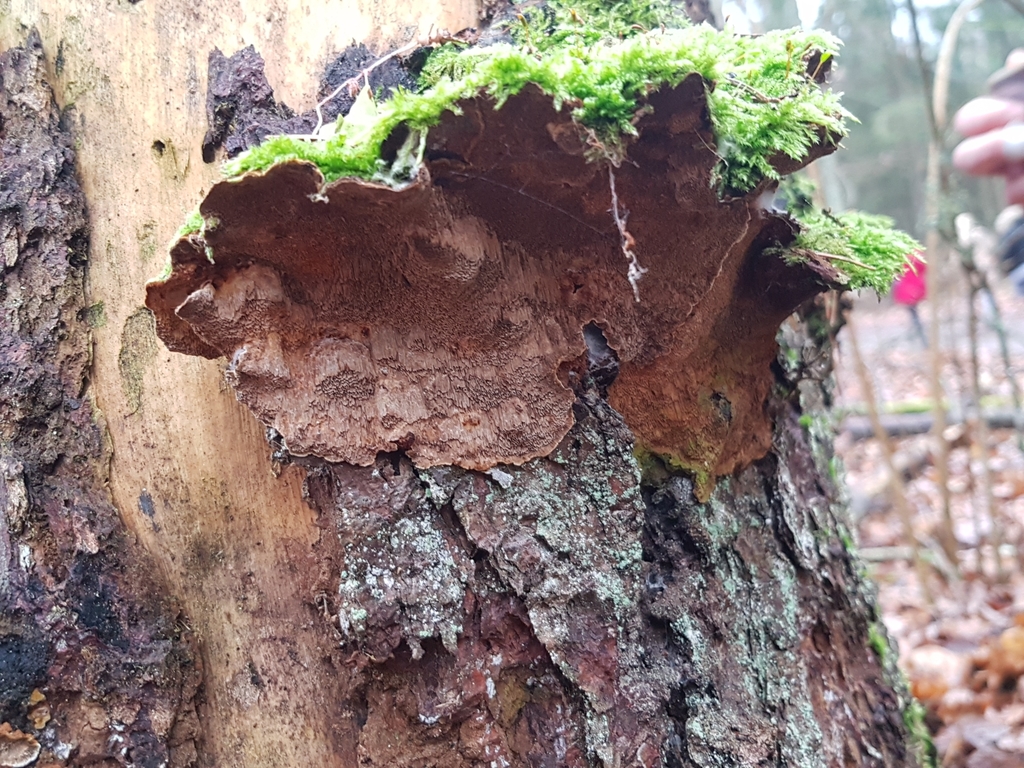
Phellinus chrysoloma forms resupinate (crust-like) fruiting bodies that lie directly against the wood. Typical characteristics include:
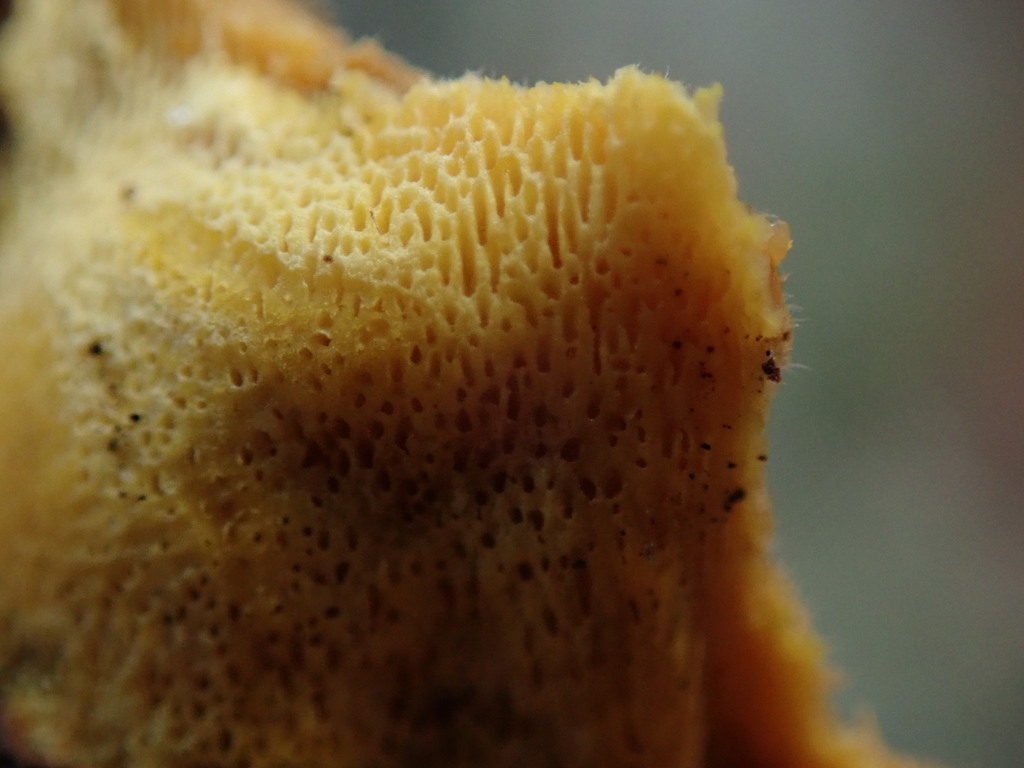
- Surface: ochraceous to golden-brown when young; darker with age
- Texture: hard, brittle, often cracked
- Pore layer: small, round pores (5–8 per mm)
- Margin: thin, lighter-colored, sometimes poorly defined
- Microscopic traits: setae present in the hymenium; dimitic hyphal system
The species lacks the bracket or shelf formations seen in other Phellinus species.
Distribution
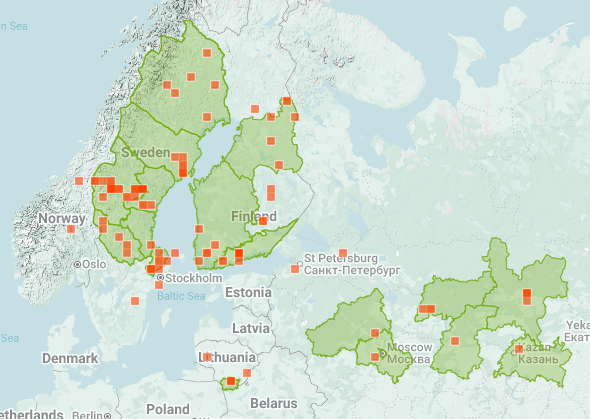
The fungus is widely recorded across boreal forests. Confirmed range includes:
- Fennoscandia: Finland, Sweden, Norway
- Northern Europe: Baltic states, northern Poland
- Russia: European Russia and Siberia
- North America: Alaska and Canada (Yukon, Northwest Territories, northern British Columbia, Québec, Newfoundland)
Occurrences outside boreal zones are rare.
Habitat
Phellinus chrysoloma grows in cool, moist environments with high deadwood availability. It is often found in:
- Old birch forests
- Mixed boreal hardwood stands
- Shaded decaying logs
- Fallen trunks and stumps
- Dead standing hardwoods
The species prefers late decay stages, where wood is already softened by earlier colonizers.
Host Trees
Primary
- Birch (Betula spp.) — the most common substrate
Secondary
- Aspen / Poplar (Populus spp.)
Occasional
- Willow (Salix spp.) — documented but uncommon
There is no strong evidence for consistent presence on alder, oak, or conifers.
Type of Rot
This fungus produces white rot, which breaks down both lignin and cellulose. This aligns with most species in the Hymenochaetaceae.
White rot contributes to:
- Structural weakening of wood
- Formation of soft, pale, fibrous residues
- Gradual exposure of deeper layers for invertebrates and microbes
Ecological Roles
1. Hardwood decomposition
It helps process dense northern hardwoods, especially birch.
2. Nutrient release
As wood breaks down, nutrients re-enter the soil system.
3. Habitat creation
It prepares substrate for insects, micro-organisms, and secondary fungi.
4. Old-growth indicators
Its presence often correlates with stable, mature forests that retain natural deadwood.
Life Cycle
The fungus releases basidiospores from its pore layer. Spores germinate on exposed wood and develop into a mycelial network that spreads through the substrate.
Key traits:
- Slow growth
- Fruiting bodies can persist for multiple seasons
- Often fruit only under stable moisture conditions
The species colonizes wood progressively, often following other early-decay fungi.
Differentiation From Similar Species
Species sometimes confused with P. chrysoloma include:
- Phellinus ferrugineofuscus
- Phellinus viticola
- Phellinidium ferrugineofuscum
Distinguishing factors:
- Golden-brown crust coloration
- Dense, small pore structure
- Presence of setae
- Strong association with birch
Microscopic examination or DNA sequencing is often required for reliable identification.
Conservation
Globally, Phellinus chrysoloma is not threatened. However:
- It is regionally vulnerable or near threatened in parts of Fennoscandia due to reductions in old-growth birch forests.
- Declines in natural deadwood supply affect local populations.
Its presence is sometimes used in forest biodiversity assessments.
Human Uses
No significant culinary or medicinal uses are documented. The fungus is mainly relevant to:
- Forest ecology
- Deadwood biodiversity research
- Decay dynamics and nutrient flow studies
Researchers also examine its enzymes for potential applications in biodegradation and lignin breakdown studies.
FAQs
1. What kind of fungus is Phellinus chrysoloma?
A resupinate polypore in the Hymenochaetaceae.
2. What type of rot does it produce?
White rot.
3. Where is it found?
Across boreal regions of Europe, Russia, Canada, and Alaska.
4. What trees does it grow on?
Mainly birch; also poplar and occasionally willow.
5. Does it form bracket-shaped fruiting bodies?
No. It forms crust-like layers on wood.
6. Is it edible?
No. It is hard, woody, and non-edible.
7. Is the species common?
Common in boreal forests, but locally vulnerable where old hardwood forests decline.
8. How big does it get?
Fruiting bodies range from a few centimeters to large patches covering sections of logs.
9. How is it identified?
By color, pore size, wood substrate, and the presence of setae. Microscopy is often needed.
10. Does it harm living trees?
It primarily colonizes dead wood, not healthy trees.
