The Smalltooth Sawfish: Status, Biology, and Conservation of an Endangered Marine Species
Introduction
The Smalltooth Sawfish (Pristis pectinata) is one of the most distinctive marine species in the world. Its long, tooth-lined rostrum gives it the “sawfish” name, and its history spans millions of years. Once common across the western Atlantic and Gulf of Mexico, the species is now listed as Endangered under the U.S. Endangered Species Act and Critically Endangered by the IUCN.
Today, the remaining U.S. population is centered along the southwest coast of Florida, where recovery and monitoring programs focus on stabilizing and increasing its numbers.
Identification and Anatomy
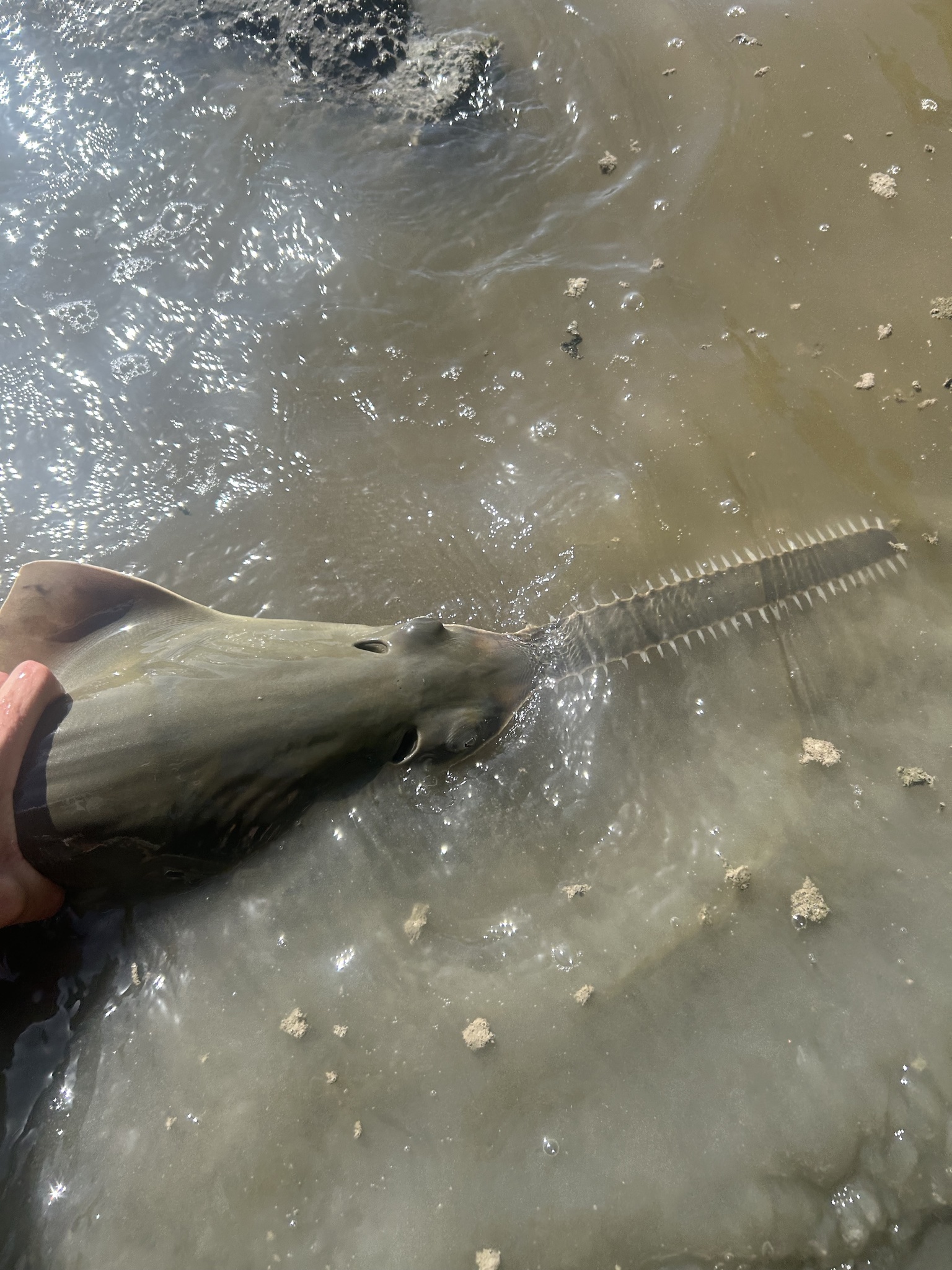
The Smalltooth Sawfish is easily recognized by its long, flattened rostrum lined with 22–29 teeth on each side. The body is shark-like but flattened, with wide pectoral fins and a dorsal fin set far back. Adults reach 14–16 feet on average, though some exceed 18 feet.
Key identification features include:
- Long rostrum with evenly spaced teeth
- Flattened head and body, similar to rays
- Brown or gray back with a pale belly
- Lack of barbels (distinguishes them from sawsharks)
The rostrum is used for navigation, prey detection, and hunting, sweeping through schools of fish or disturbing buried prey on the seafloor.
Range and Habitat
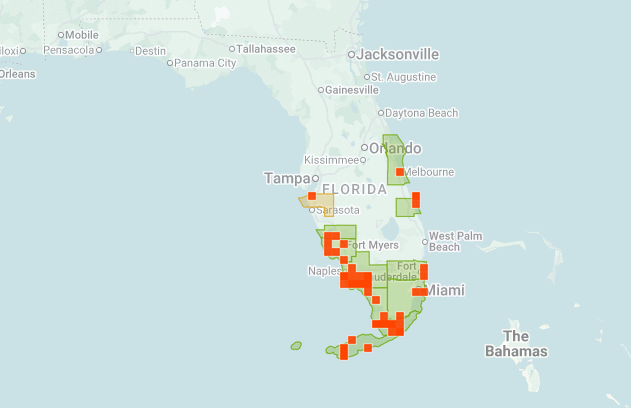
Historically, the Smalltooth Sawfish ranged from New York to Brazil, including the Gulf of Mexico and Caribbean. Its current U.S. range is far smaller. Today, most confirmed sightings occur in:
- Southwest Florida (Ten Thousand Islands, Charlotte Harbor)
- Florida Keys
- Florida Bay and Everglades estuaries
The species uses shallow coastal waters, estuaries, mangroves, and bays, especially during early life stages. Juveniles rely heavily on mangrove shorelines, which provide shelter from predators and access to small fish and crustaceans.
Life Cycle and Reproduction
Sawfish are viviparous, giving birth to live young after embryos develop inside the mother.
Important reproductive traits include:
- Gestation: about 12 months
- Litter size: 7–14 pups
- Size at birth: roughly 2 feet
- Maturity: 7–12 years depending on sex
Young sawfish spend several years in shallow estuaries before moving offshore as adults.
Feeding and Ecological Role
Smalltooth Sawfish feed on small fish, crustaceans, and benthic organisms. The rostrum contains electroreceptors that detect prey movement. Sawfish swing the rostrum through schools of fish or use it to uncover organisms buried in mud and sand.
Their role in the ecosystem includes:
- Controlling populations of schooling fish
- Maintaining balance among benthic species
- Supporting predators through scavenged remains
Because they inhabit vulnerable coastal zones, their presence often reflects the overall health of estuary systems.
Threats to the Species
The Smalltooth Sawfish decline is primarily linked to human activity across the last century. Major threats include:
1. Bycatch in Commercial and Recreational Fisheries
The long rostrum becomes easily entangled in nets, lines, and trawls. Historically, gillnets caused severe mortality.
2. Loss of Critical Habitat
Mangrove removal, dredging, and coastal development reduce nursery habitat essential for juvenile survival.
3. Slow Reproductive Rate
Long lifespans and late maturity limit the species’ recovery potential.
4. Environmental Change
Rising water temperatures, altered salinity, and increased storm intensity affect habitat quality and distribution.
Conservation and Recovery Efforts
The Smalltooth Sawfish is the first marine fish listed under the U.S. Endangered Species Act (2003), which triggered several recovery actions:
Legal Protections
- Full protection from harvest or harm under ESA and state law
- Habitat conservation and restoration in Florida estuaries
- Gear restrictions and bycatch reduction protocols
Recovery Programs
- NOAA Fisheries long-term monitoring
- Satellite tagging and population tracking
- Public reporting systems for sawfish encounters
- Research on genetic diversity and reproduction
Recent data show slow but steady population growth in core Florida regions, though expansion beyond this area remains limited.
Outlook
The species’ long-term survival depends on continued protection of Florida’s coastal habitats, reduced bycatch, and strengthened public awareness. Population models suggest that sustained conservation could lead to range expansion and recovery over the coming decades.
Although still rare, the Smalltooth Sawfish represents one of the more hopeful stories in marine conservation due to coordinated efforts and clear signs of resilience.
FAQs About the Smalltooth Sawfish
1. What is the scientific name of the Smalltooth Sawfish?
Pristis pectinata.
2. Where is it found today?
Primarily southwest Florida and the Florida Keys.
3. Why is it endangered?
Bycatch, habitat loss, and slow reproduction.
4. How large do they grow?
Most adults reach 14–16 feet.
5. Do they attack humans?
No. They avoid contact and use the rostrum only for feeding.
6. What do they eat?
Small fish and bottom-dwelling organisms.
7. How many pups do they have?
Usually 7–14 per litter.
8. Can you catch one legally?
No. They are fully protected under U.S. law.
9. How should anglers handle accidental catches?
Keep the fish in the water, cut the line, and report the encounter.
10. Are sawfish sharks or rays?
They are rays within the order Rhinopristiformes.
