The Most Devastating Hurricanes in History
Experiencing a hurricane is one of the only ways to understand the full force of nature. The tension before landfall caused in part by the apocalyptic scenes of boarded buildings. Knowing the aftermath may reshape entire communities.Whether you’re seeking historical context or preparing for storm season yourself, here’s a look at the worst hurricanes in history—and the lasting marks they left behind on the communities that they effected.
1. Hurricane Katrina (2005)
When discussing catastrophic hurricanes, Hurricane Katrina is almost always at the top of the list. Though Katrina was a Category 5 storm over the Gulf of Mexico, it made landfall as a Category 3. Despite this downgrade, it would became one of the costliest hurricanes ever seen in the United States, with damages estimated at $125 billion and nearly 1,400 fatalities.
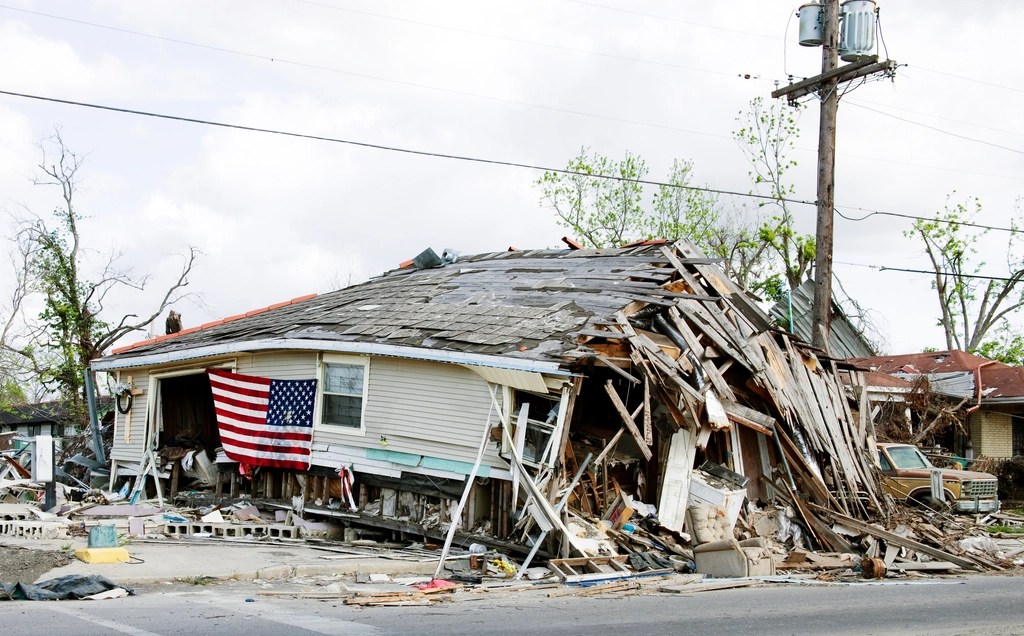
Barber Shop located Ninth Ward by Carol M Highsmith is licensed under CC-CC0 1.0
The levee failures in New Orleans resulted in 80% of the city being flooded and the displacement of hundreds of thousands of residents. More than a decade later, parts of New Orleans are still recovering.
Details:
- $125 billion in estimated damage
- 1,390+ fatalities
- Largest internal displacement in U.S. history
- Catastrophic levee failures
2. The Great Galveston Hurricane (1900)
The 1900 Galveston Hurricane remains the deadliest natural disaster in U.S. history. Without modern forecasting technologies, the storm struck Galveston, Texas, with minimal warning, causing an estimated 8,000–12,000 deaths.
At the time, Galveston was a booming port city. The majority of the city’s structures were destroyed, prompting the massive construction project that was a massive seawall and the elevation of entire neighborhoods in the aftermath.
Details:
3. Hurricane Maria (2017)
Hurricane Maria struck Puerto Rico as a high-end Category 4 hurricane and triggered a full-fledged humanitarian crisis. Nearly the entire island lost electricity and communication; many critical infrastructure systems failed. Initial reports drastically undercounted the death toll, but studies now estimate around 3,000 fatalities, with total damages near $90 billion.
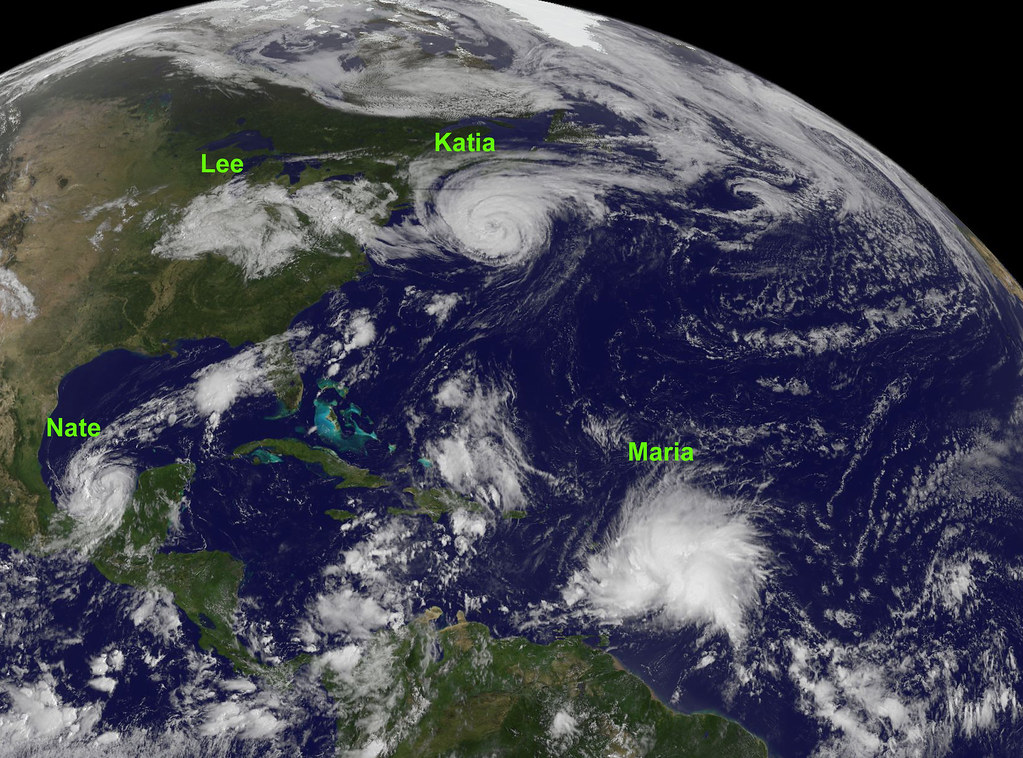
A Wild Weekend in the Tropical Atlantic by NASA Goddard Photo and Video is licensed under CC-BY 2.0
The aftermath underscored how vulnerable communities become when essential services are cut off following a major storm.
Details:
- Landfall as Category 4
- Approximately 3,000 fatalities
- $90 billion in damage
- Widespread collapse of infrastructure and utilities
4. Hurricane Harvey (2017)
Harvey demonstrated how record rainfall, rather than wind, can define a hurricane disaster. The storm dropped over 51 inches of rain on southeast Texas—the highest rainfall total ever recorded from a single U.S. storm.
The resulting floods submerged entire highways, neighborhoods, and communities. Tying Katrina in cost, Harvey caused an estimated $125 billion in damages and set new benchmarks for non-wind-related hurricane destruction.
Details:
- 51.88 inches of rain (all-time U.S. storm record)
- $125 billion in damage
- Catastrophic flooding in Houston and surrounding areas
5. Hurricane Andrew (1992)
Hurricane Andrew was compact but devastating when it made landfall as a Category 5 storm in South Florida. Over 63,000 homes were destroyed and thousands more severely damaged or wiped off their foundations.
Losses from Andrew led to radical changes in state building codes and emergency management. At the time, it was the most expensive disaster in Florida and the U.S.
Details:
Honorable Mentions
- Hurricane Mitch (1998): Over 11,000 fatalities in Central America, mainly caused by flooding and landslides in Honduras and Nicaragua.
Labor Day Hurricane (1935): The most intense hurricane to ever strike the U.S. based on central pressure, with winds up to 185 mph at landfall.
Typhoon Tip (1979): The largest and most intense tropical cyclone ever recorded globally; 1,380 miles across, with sustained winds reaching 190 mph and a record low pressure of 870 hPa.
What Makes a Hurricane “The Worst”?
Defining the “worst” hurricane depends on the metric:
- Strength: By wind speed and pressure, look to the Labor Day Hurricane (1935) or Typhoon Tip (1979).
- Death toll: Galveston (1900) and Mitch (1998) were the deadliest.
- Cost: Katrina and Harvey remain the most expensive.
- Long-term impact: Maria and Andrew left scars that transformed entire regions.
Final Thoughts
In hurricane-prone regions, this history isn’t just academic—it’s a vital lesson. The storms listed above didn’t only make the news; they fundamentally changed entire lives and communities, and they continue to shape how we plan and prepare for extreme weather events.
